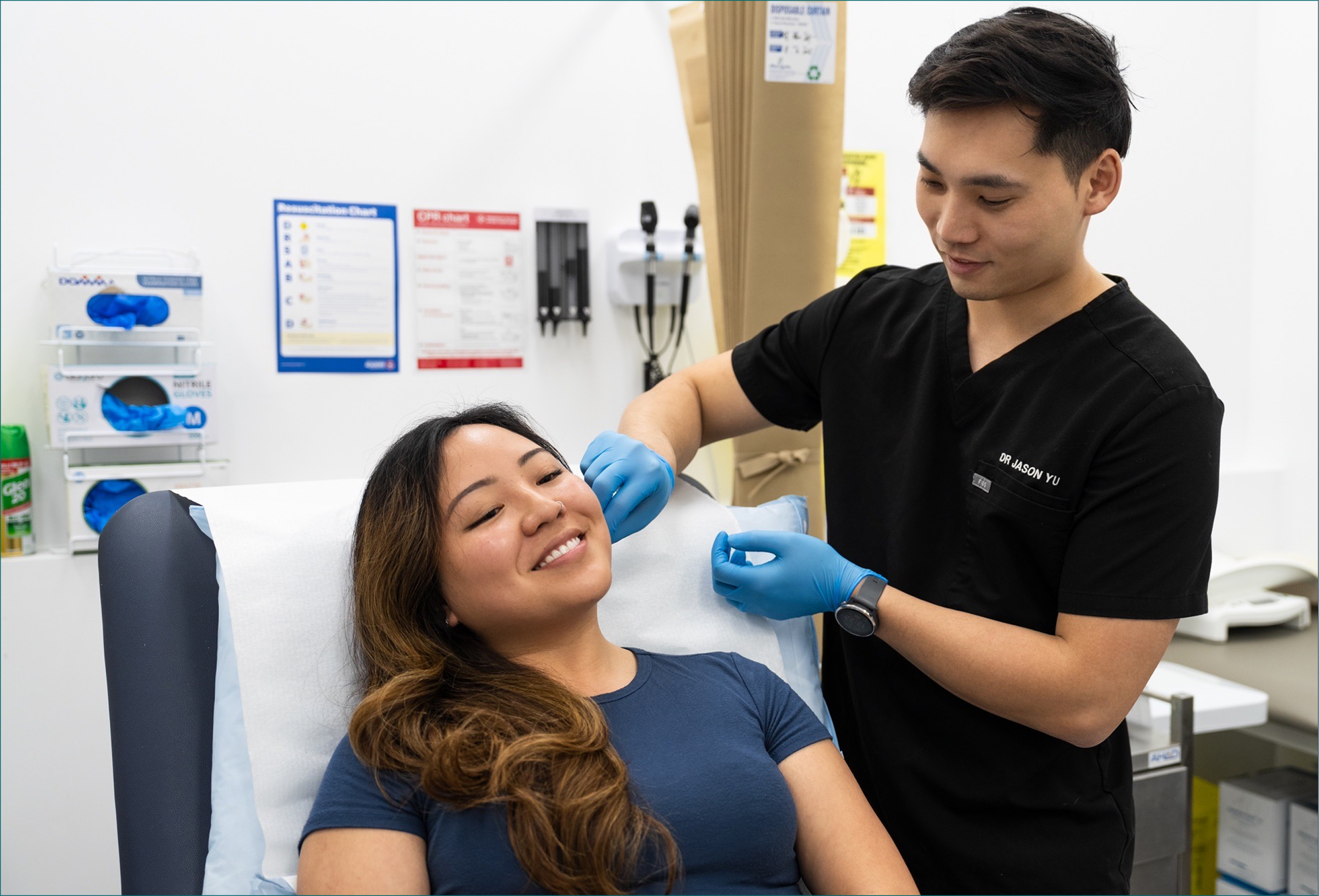

Nasoendoscopy
A procedure where a small, flexible camera is used to look inside your nose and throat. It's helpful in identifying things like nasal polyps and enlarged adenoids or turbinates.
Nasoendoscopy is a procedure to examine the internal structures of the nose and throat (1). It involves a small, flexible camera called an endoscope gently inserted through the nostril. It’s a tool the doctor uses to help diagnose various conditions, including enlarged adenoids, allergic rhinitis or hay fever (2) (3).
While you are seated comfortably, a local anaesthetic nasal spray is used to numb the nose before the start of the procedure, ensuring minimal discomfort. A tiny camera will then be inserted into your nose to examine your nasal cavity and throat. The entire process typically takes less than a minute.
Most patients find nasoendoscopy slightly uncomfortable but not painful. It can be performed in children as young as 6 years old.
There is no down time after nasoendoscopy so patients can return to work or their activities straight after the procedure.
Dr Jason includes the cost of nasoendoscopy as part of his allergy assessment; therefore, it is fully covered by Medicare. If you do not require an allergy assessment, there will be a small out-of-pocket fee for the procedure.
1. McKechnie, Dr Doug. Nasoendoscopy. [Online] Egton Medical Information Systems Limited, 06 9, 2023. [Cited: 12 2023, 23.] https://patient.info/ears-nose-throat-mouth/nasoendoscopy.
2. Middle turbinate edema as a diagnostic marker of inhalant allergy. Aneeza W. Hamizan, Jenna M. Christensen, Jareen Ebenzer, Gretchen Oakley, Jessica Tattersall, Raymond Sacks, Richard J. Harvey. 1, s.l. : International Forum of Allergy & Rhinology, 2017, International Forum of Allergy & Rhinology, Vol. 7, pp. 37-42.
3. Reliability Assessment of the Endoscopic Examination in Patients with Allergic Rhinitis. Georges K. Ziade, Reem A. Karami, Ghina B. Fakhri, Elie S. Alam, Abdul Latif Hamdan, Marc M. Mourad, Usama M. Hadi. 3, s.l. : Allergy & Rhinology, 2016, Therapeutic Advance in Allergy and Rhinology, Vol. 7.